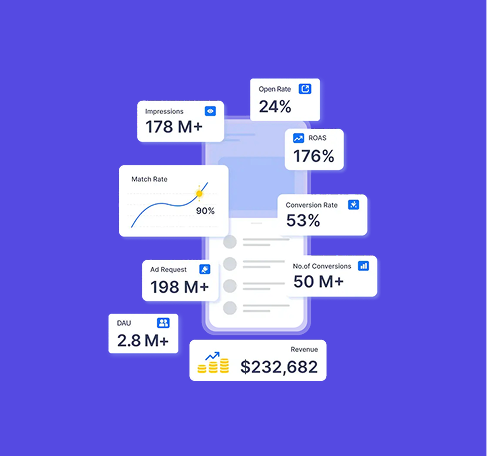

Turning a support-led AdX workflow into a self-serve platform
AdX was built to help GreedyGame move from a support-heavy way of onboarding premium publishers into a product that could scale. Publishers needed a clearer path to get set up, verify requirements, create ad units, and track monetisation, while internal teams needed stronger control across approvals, account status, and revenue workflows.
The Challenge
Before a publisher could start monetising, they had to verify app ownership, connect or create a Google Ad Manager account, move through approval checkpoints, and then set up ad units. These steps were spread out and handled manually, with different parts of the journey sitting across teams.
The process worked, but it didn't hold together as one system.
Looking at how publishers moved through this flow, a few patterns stood out:
- the process felt opaque once a request moved beyond the first step
- app-ads.txt verification created the highest friction, especially for non-technical users
- publishers had very little visibility into status, blockers, or what came next
- internal teams were repeatedly stepping in to resolve setup issues and push approvals forward
- the workflow worked, but mostly because people were holding it together manually
System Architecture
How it worked
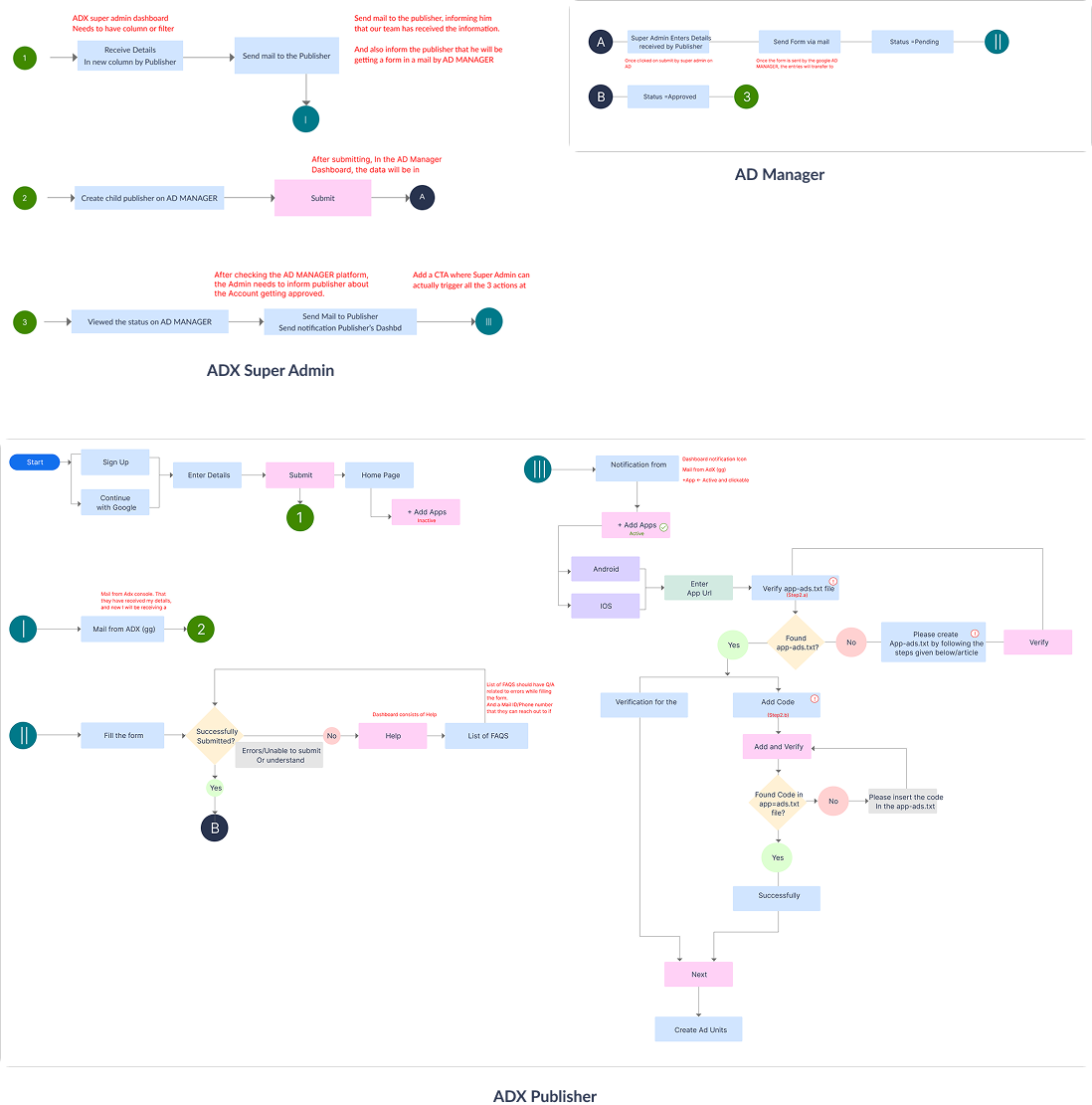
As a publisher moved from app registration to verification, account setup, and ad unit creation, their progress was reflected in the system in real time. That changed how both sides worked.
- For publishers, it meant they didn't have to rely on follow-ups to understand where things stood. They could see what was done, what was pending, and what came next.
- For internal teams, it meant they no longer had to piece things together manually. They could see where an account was stuck, what needed action, and step in only when required.
Under the hood, this was tied together through Google Ad Manager integration, app-ads.txt verification, role-based access, and performance tracking. But the value wasn't in these parts individually, it was in how they worked together as one system.
Design System & Foundations
Publisher side
The publisher side supported the full journey from account access and app registration to verification, ad unit setup, and performance tracking.
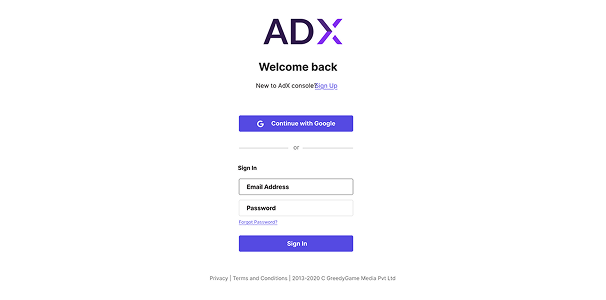
Publisher Authentication
A simple login for existing publishers to enter the AdX workspace.

App Registration
A guided flow to register apps, verify ownership, and complete the steps needed for domain validation.
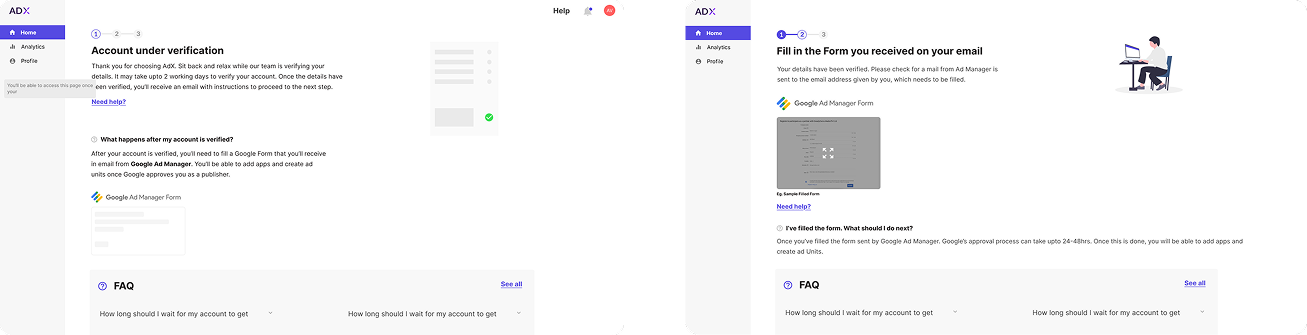
Account Verification
A verification flow to either create a new Google Ad Manager account or connect an existing one for AdX activation.
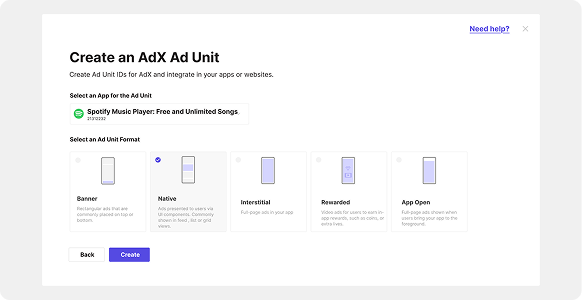
Ad unit setup
A structured interface for creating supported ad formats with clear guidance around available inventory types.
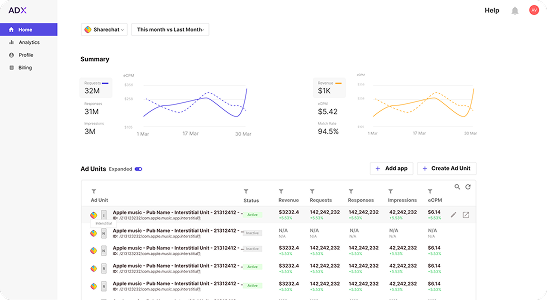
Performance Dashboard
A dashboard that gave publishers visibility into revenue, impressions, and unit-level performance over time.
Admin side
The admin side gave internal teams a way to manage publisher accounts, monitor platform performance, and handle communication and operational workflows at scale.
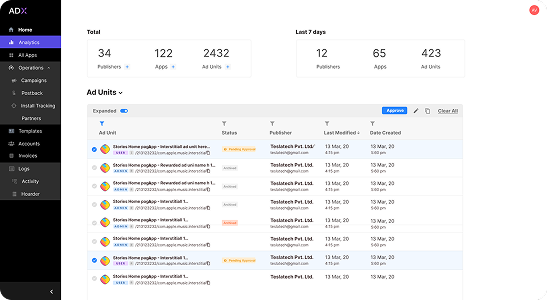
Ad Units Performance Dashboard
A central view of publishers, apps, impressions, and revenue, with table-level visibility into individual ad unit performance.

Publisher Management & Communication
An operational interface for managing publisher accounts, statuses, notifications, and revenue-related workflows across multiple accounts.
The Impact
The shift showed up in how the system started holding itself together as scale increased. What earlier depended on constant coordination and support began to run with far fewer touchpoints, even though the workflow itself remained just as demanding. Instead of progress being tracked across calls and follow-ups, more of that load moved into the product, making the system easier to operate without losing control.
That shift showed up in both usage and business outcomes:
- 1,500+ publishers onboarded
- 10B+ monthly impressions processed
- 40% average revenue uplift for publishers
- 20-40% eCPM improvement over traditional ad networks
- $17.2M ARR during a phase of rapid growth